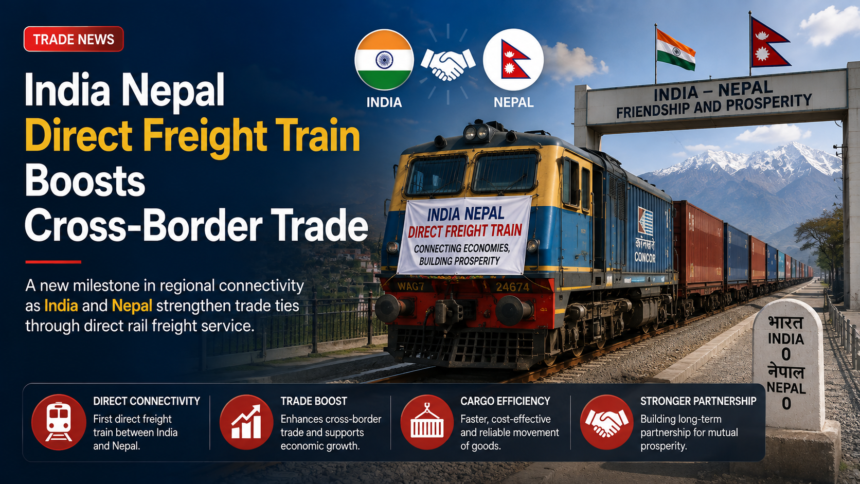
India has achieved a significant milestone in regional trade by launching its first direct container freight train to Nepal, carrying 1,225 tonnes of cargo from Kolkata Port. The new rail service is expected to simplify cross-border logistics, reduce transportation delays, and strengthen trade connectivity between the two neighbouring countries.
The launch is more than just a new freight service. It reflects India’s broader strategy of improving logistics infrastructure, enhancing regional connectivity, and making cross-border trade faster, more efficient, and cost-effective for businesses.
What Is the India Nepal Direct Freight Train?
The newly launched freight service enables containerised cargo to move directly from Kolkata Port to Nepal by rail without relying on multiple transport modes or lengthy cargo transfers.
The inaugural train transported 1,225 tonnes of goods, marking the beginning of a more streamlined logistics corridor between India and Nepal.
For exporters and importers, this means fewer handling points, lower transit risks, and faster cargo movement.
Why Is This Rail Link Important?
Nepal is a landlocked country and depends heavily on Indian ports for international trade.
Traditionally, cargo often required multiple stages of transportation involving ports, trucks, inland container depots, and railway transfers before reaching its destination.
The new direct freight service simplifies this process by providing a dedicated rail connection that reduces logistical complexity.
How Will the New Freight Corridor Improve Logistics?
Faster Cargo Movement
Direct rail transportation reduces transit time by minimizing unnecessary handling and transfer points.
Lower Transportation Costs
Rail freight is generally more economical for transporting large volumes of cargo over long distances, helping businesses reduce logistics expenses.
Reduced Cargo Handling
Fewer loading and unloading stages lower the risk of cargo damage and delays.
Better Supply Chain Efficiency
Businesses can plan inventory more effectively with more predictable delivery schedules and improved transit reliability.
Benefits for India-Nepal Trade
The direct freight train is expected to strengthen economic ties between the two countries.
Key advantages include:
- Faster cross-border movement of goods
- Improved trade efficiency
- Lower logistics costs
- Better access to international markets for Nepal
- Enhanced supply chain reliability
Improved transport infrastructure can encourage higher trade volumes over time by making exports and imports more competitive.
Why Kolkata Port Matters
Kolkata Port serves as one of the most important gateways for Nepal’s overseas trade.
Many imported goods destined for Nepal arrive through this port before moving inland.
The introduction of direct container rail services improves connectivity between the port and Nepal, reducing delays that previously occurred during cargo transfers.
What Does This Mean for Exporters and Importers?
Businesses engaged in international trade stand to benefit significantly.
Exporters
Indian exporters can deliver goods to Nepal more efficiently with reduced transportation time and better shipment predictability.
Importers
Nepalese businesses importing goods through Kolkata Port can expect smoother cargo movement and lower logistics costs.
Logistics Companies
Freight operators and supply chain providers may benefit from increased demand for integrated rail-based logistics solutions.
Which Industries Could Benefit the Most?
Several sectors are likely to gain from improved rail connectivity.
- FMCG products
- Consumer goods
- Pharmaceuticals
- Textiles
- Agricultural products
- Industrial machinery
- Construction materials
- Automotive components
Industries that depend on timely deliveries and efficient transportation are expected to benefit the most.
How Does This Support India’s Connectivity Goals?
The freight corridor aligns with India’s broader infrastructure and regional connectivity initiatives.
The government has been investing heavily in:
- Modern railway infrastructure
- Port modernization
- Dedicated freight corridors
- Multimodal logistics parks
- Cross-border transport agreements
Improving trade routes with neighbouring countries supports economic integration while strengthening India’s position as a regional logistics hub.
Challenges That Remain
Although the new rail service is a major step forward, certain challenges still need attention.
Customs Coordination
Efficient customs procedures remain essential for ensuring quick border clearance.
Infrastructure Expansion
Additional rail capacity and modern logistics facilities will be needed as cargo volumes increase.
Digital Integration
Further digitisation of documentation and cargo tracking can improve transparency and reduce administrative delays.
Growing Trade Demand
As trade expands, continued investment in rail infrastructure will be necessary to maintain efficiency.
What Does This Mean for Regional Commerce?
The direct freight train represents more than an infrastructure upgrade.
Improved logistics can:
- Increase bilateral trade
- Support regional economic growth
- Reduce supply chain disruptions
- Encourage private sector investment
- Improve competitiveness for exporters
As transportation becomes faster and more reliable, businesses gain greater confidence in cross-border supply chains.
Final Thoughts
The launch of the India Nepal direct freight train marks an important milestone in South Asian logistics and regional trade. By transporting 1,225 tonnes of containerised cargo directly from Kolkata Port to Nepal, the new rail corridor simplifies freight movement, reduces logistics costs, and strengthens economic connectivity.
For exporters, importers, and supply chain businesses, the initiative offers faster deliveries and more efficient trade routes. As India continues investing in transport infrastructure and regional connectivity, projects like this are expected to play a key role in supporting long-term trade growth and economic cooperation.
FAQ
What is the India Nepal direct freight train?
It is India’s first direct container freight train connecting Kolkata Port with Nepal, designed to improve cross-border cargo transportation.
How much cargo did the inaugural freight train carry?
The first direct freight train transported approximately 1,225 tonnes of goods.
Why is this freight corridor important?
The direct rail connection reduces transportation delays, lowers logistics costs, simplifies cargo movement, and improves supply chain efficiency.
Who will benefit from the new freight train?
Exporters, importers, logistics companies, manufacturers, and businesses involved in India-Nepal trade are expected to benefit the most.
How does this strengthen regional connectivity?
The rail service improves trade infrastructure, supports economic cooperation between India and Nepal, and enhances cross-border logistics across South Asia.