Kunal Bahl’s Startup Philosophy: Why Strong Fundamentals Matter More Than Short-Term Growth
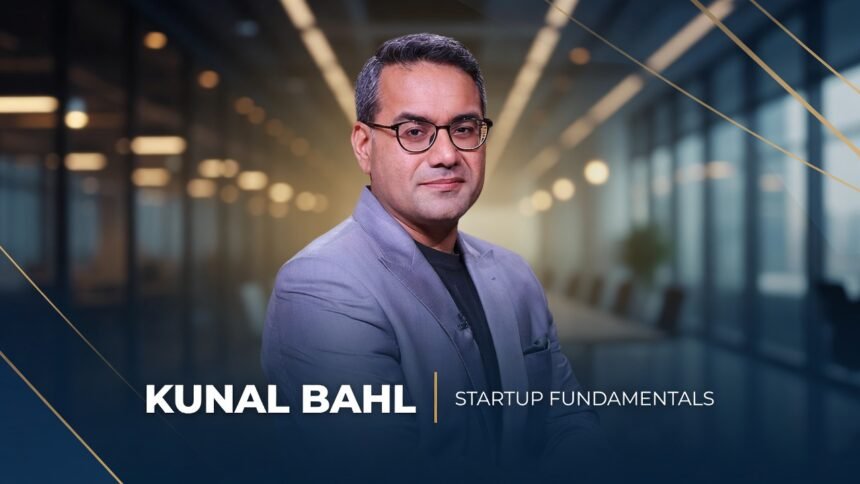
Kunal Bahl, co-founder of Snapdeal and Titan Capital, is drawing attention for a simple but important message for entrepreneurs: “Strong fundamentals matter more than short-term growth.” The statement has resonated with India’s startup ecosystem at a time when founders are increasingly being encouraged to look beyond headline growth numbers and focus on building businesses that can create lasting value.
Bahl has spent years building companies and investing in early-stage startups, giving him a perspective shaped by both entrepreneurship and venture investing. Through Titan Capital, he has backed hundreds of startups across sectors, including consumer technology, fintech, SaaS and other emerging businesses.
The philosophy behind the quote is particularly relevant for early-stage founders who can sometimes become overly focused on user numbers, revenue growth, valuations or fundraising milestones.
What Does Kunal Bahl Mean by Strong Fundamentals?
Strong fundamentals generally refer to the underlying health of a business rather than just its speed of expansion.
For a startup, these fundamentals can include unit economics, gross margins, customer retention, cash flow discipline, product-market fit and a sustainable business model.
A company can grow rapidly while still losing significant amounts of money on every customer. That type of growth may create impressive numbers in the short term, but it becomes difficult to sustain if the economics do not eventually improve.
Bahl’s broader commentary on entrepreneurship has repeatedly emphasized focus, economics and culture as important pillars of building a successful company. Snapdeal’s own account of his investment philosophy also highlights the importance of understanding business economics and maintaining financial prudence.
Growth Alone Is Not Enough
For years, startup success has often been associated with rapid expansion.
Founders are expected to acquire customers quickly, enter new markets, increase revenue and raise successive funding rounds. While these metrics remain important, growth without a clear path toward sustainable economics can create problems later.
A startup that spends ₹500 to acquire a customer who generates only ₹200 of long-term value may be growing its customer base, but it is not necessarily creating a healthy business.
This is where fundamentals become critical.
Entrepreneurs need to understand how much they spend to acquire customers, how much those customers contribute to revenue and margins, and whether the economics improve as the company scales.
Kunal Bahl’s View on Cash Burn
Interestingly, Bahl’s philosophy does not mean that every form of startup cash burn is bad.
In earlier comments, he argued that startups should not automatically be criticised for spending heavily if the spending is being used strategically to create long-term value.
Speaking at TiE Delhi-NCR’s India Internet Day in 2025, Bahl said investments in technology and customer acquisition can help build long-term business value. He argued that the important question is why the money is being spent, rather than simply how much cash a company is burning.
That distinction is important.
A startup may deliberately operate at a loss while building technology, expanding infrastructure or acquiring customers in a market with strong long-term potential. The concern arises when spending continues without a clear understanding of the economics or a credible path toward a stronger business.
Sustainable Growth vs Short-Term Growth
The difference between sustainable growth and short-term growth can be significant.
Short-term growth may focus on:
- Rapid customer acquisition
- Heavy discounts
- Large advertising expenditure
- Aggressive market expansion
- Increasing transaction volumes
- Raising larger funding rounds
Sustainable growth, meanwhile, focuses on:
- Improving unit economics
- Strong customer retention
- Healthy gross margins
- Efficient customer acquisition
- Responsible spending
- Repeat purchases
- Building a durable competitive advantage
The second approach may appear slower initially, but it can create a stronger foundation for long-term expansion.
Why the Message Matters for Early-Stage Founders
For first-time entrepreneurs, startup culture can sometimes create pressure to grow as quickly as possible.
Fundraising announcements, valuation milestones and user numbers can become measures of success. But these figures do not necessarily tell the complete story of a company’s health.
A founder may have millions of users but weak retention. Another company may have a smaller customer base but excellent margins and strong repeat business.
The latter could ultimately have the more durable business model.
This is why Bahl’s message is particularly relevant for early-stage founders. Building a company is not simply about becoming bigger; it is about becoming better, more efficient and more valuable over time.
Titan Capital’s Long-Term Investment Approach
Bahl’s philosophy also reflects the investment approach associated with Titan Capital.
Bahl and fellow Snapdeal co-founder Rohit Bansal established Titan Capital as an early-stage investment firm. The firm has backed a large number of startups across sectors and has emphasized long-term value creation.
Bahl has previously described the firm’s philosophy using the idea of “Slow Capital,” arguing that India’s startup ecosystem can sometimes become too focused on moving extremely fast.
His argument is not against ambition or growth. Instead, it is about ensuring that speed does not come at the expense of sound decision-making and business fundamentals.
What Founders Can Learn From the Philosophy
There are several practical lessons emerging entrepreneurs can take from Bahl’s approach.
Know Your Unit Economics
Founders should understand exactly how much it costs to acquire a customer and how much value that customer generates.
Track Margins
Revenue growth is only one part of the equation. Healthy margins can determine whether a company can eventually become profitable and self-sustaining.
Spend With a Purpose
Cash burn can be justified when it is connected to a clearly defined strategic objective. Spending simply to show growth can become dangerous.
Focus on the Core Business
Bahl has repeatedly emphasized the importance of focus. Startups can lose momentum when they attempt to pursue too many opportunities simultaneously.
Think Beyond the Next Funding Round
A successful startup should ideally be built to survive beyond its next investment round. Long-term business value should remain more important than simply achieving the next valuation milestone.
The Bigger Message for India’s Startup Ecosystem
Bahl’s comments arrive as India’s startup ecosystem continues to mature.
Investors and founders are increasingly paying attention to profitability, governance, margins and capital efficiency alongside growth. The funding environment has also made it more important for startups to demonstrate that additional capital can translate into meaningful business progress.
This does not mean that startups should stop investing in growth. Instead, it suggests that growth and fundamentals need to work together.
A business that grows quickly but has no sustainable economics can struggle when funding conditions change. A company with strong fundamentals has a better chance of adapting to changing market conditions.
A Simple Lesson for Entrepreneurs
The central message behind Bahl’s philosophy is straightforward: growth is valuable when it strengthens the business rather than simply making the numbers bigger.
For founders, that means asking difficult questions before chasing the next milestone.
Are customers staying?
Are margins improving?
Is customer acquisition becoming more efficient?
Does the product solve a genuine problem?
Can the company eventually generate sustainable profits?
If the answers are strong, growth becomes more meaningful.
For India’s next generation of entrepreneurs, Bahl’s emphasis on fundamentals offers a reminder that building a lasting company is ultimately a long-term exercise—not a race to the next headline.
Frequently Asked Questions
Who is Kunal Bahl?
Kunal Bahl is the co-founder of Snapdeal and Titan Capital. He is also an active startup investor and mentor who has backed numerous early-stage companies.
What is Kunal Bahl’s startup philosophy?
Bahl’s broader philosophy emphasizes focus, strong business economics, financial discipline and long-term value creation rather than pursuing growth without a clear business rationale.
What does “strong fundamentals matter more than short-term growth” mean?
The idea is that startups should prioritize the underlying health of their businesses—including unit economics, margins, customer retention and sustainable operations—rather than focusing exclusively on rapid short-term expansion.
Does Kunal Bahl believe startups should avoid cash burn?
No. Bahl has previously said cash burn can be justified when startups have clarity about where and why they are investing, particularly in technology and customer acquisition that can create long-term value.
Why are startup fundamentals important?
Strong fundamentals can help a startup survive changing market conditions, reduce dependence on external funding and create a clearer path toward sustainable profitability.
What is Titan Capital?
Titan Capital is an early-stage investment firm co-founded by Kunal Bahl and Rohit Bansal. It invests in startups across multiple sectors and focuses on identifying businesses with long-term potential.